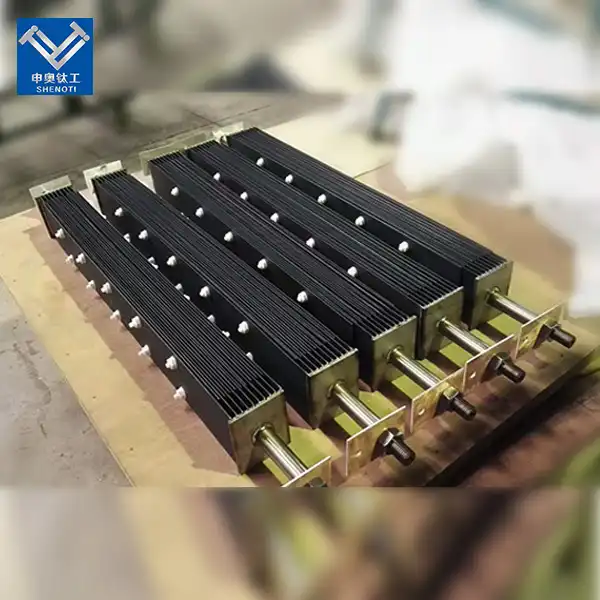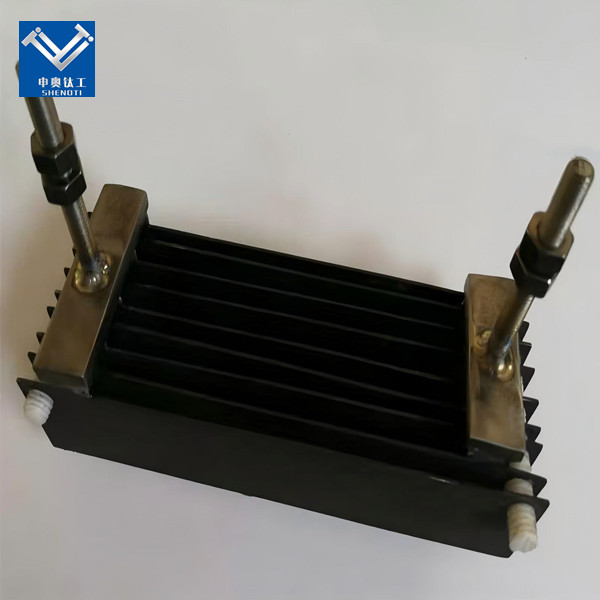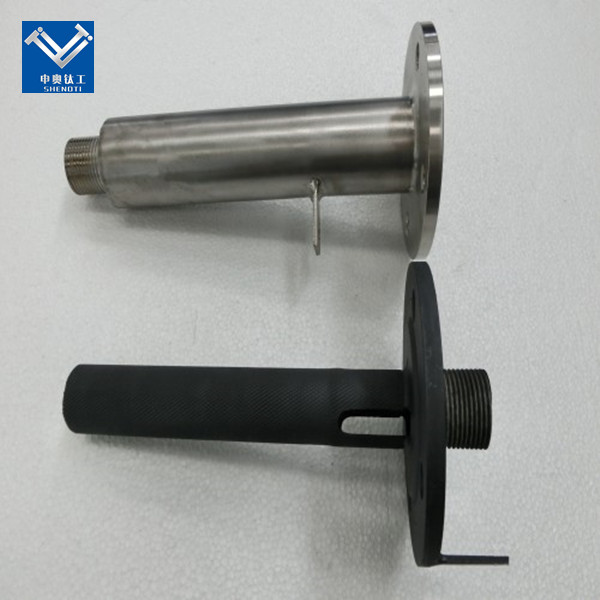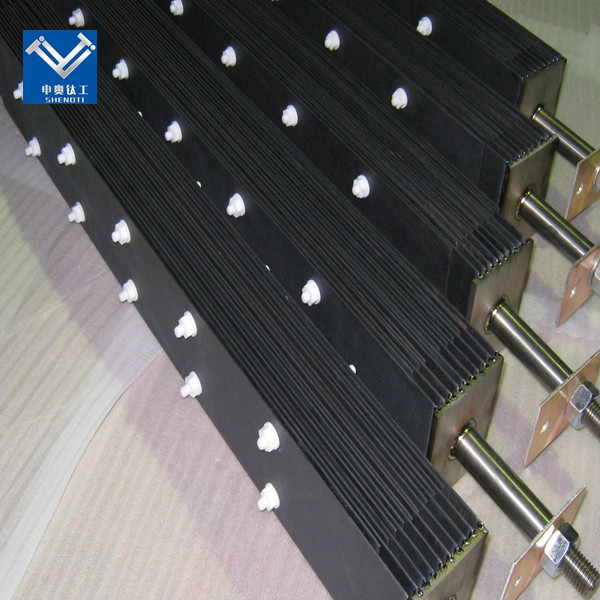
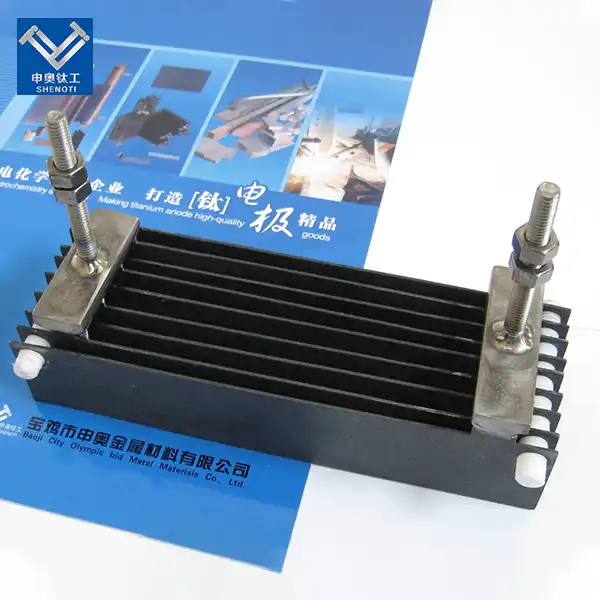
Titanium Anode Assembly for Public Swimming Pool Disinfection


Coating: Mixed Metal Oxide (MMO)
Coating Structure: Dense and highly conductive catalytic layer
Custom made: Plate, Mesh, Tube, and Customed
Expected Lifespan: Designed for sustained performance over prolonged operational cycles
Advantage:
High electrocatalytic activity
Strong corrosion resistance
Long service life
Dimensionally stable
Titanium Anode Assembly for Public Swimming Pool Disinfection
In the field of public swimming pool water disinfection, electrolytic online chlorine generation technology is gradually replacing traditional manual chlorine dosing methods due to its safety, stability, and low maintenance characteristics. Our Titanium Anode Assembly for Public Swimming Pool Disinfection at Baoji City ShenAo Metal Materials Co., Ltd. is designed specifically for sodium hypochlorite generation units used in commercial swimming pools, water parks, and large spa facilities. It features an integrated electrode assembly solution, with anodes made of Grade 1 or Grade 2 pure titanium substrate coated with a ruthenium-iridium mixed metal oxide catalytic layer, and cathodes made of corrosion-resistant pure titanium or titanium alloy. The anode coating exhibits a very low chlorine evolution overpotential in dilute brine electrolyte, efficiently generating active chlorine with low energy consumption to ensure continuous and stable disinfection for high-flow water bodies. The well-designed electrode spacing and flow channel configuration ensure uniform electrolyte distribution between the electrodes and smooth gas venting. This anode assembly is suitable for various commercial swimming pool disinfection equipment, serving as a reliable electrode solution for achieving intelligent water quality management and low-maintenance operation.
This product is for B2B industrial and commercial equipment use only. Operators should follow relevant chemical safety protocols and electrolysis operation standards.
Technical Specifications
|
Substrate Material |
Grade 1/2 Pure Titanium (anode substrate), Pure Titanium/Titanium Alloy (cathode) |
|
Coating Type |
Ruthenium-Iridium Mixed Metal Oxide (RuO₂-IrO₂), formulation optimizable per water quality and operating conditions |
|
Coating Thickness |
5–15 μm (adjusted based on current density and brine concentration) |
|
Coating Loading |
10–120 g/m² (customized for rated chlorine output) |
|
Current Density Range |
100–800 A/m² (adjusted based on generator specification and chlorine output) |
|
Operating Voltage Window |
0.5 V–2.0 V (typical dilute brine chlorine evolution potential range) |
|
Electrode Assembly Configurations |
Plate interdigitated, mesh interdigitated, tubular coaxial, custom |
|
Applicable Electrolytes |
Dilute brine (NaCl), seawater |
Why Choose Our Titanium Anodes?
- High Chlorine Evolution Activity for Continuous Disinfection of High-Flow Water Bodies
Public swimming pools feature large water volumes and high bather loads, placing elevated demands on the chlorine generation capacity and stability of the disinfection system. Our ruthenium-iridium coating exhibits a very low chlorine evolution overpotential in dilute brine, enabling efficient active chlorine generation at low cell voltage to ensure continuous and stable disinfection for high-flow water bodies. Compared to traditional manual chlorine dosing, the online electrolytic chlorine generation method avoids chemical storage and transportation risks and delivers more balanced and stable disinfection results. - Integrated Electrode Assembly Design Optimized for Installation and Maintenance Efficiency
The electrode assembly features a precisely assembled anode-cathode interdigitated structure with optimized electrode spacing, ensuring uniform electrolyte distribution across the full electrode surface. The integrated design significantly simplifies on-site installation procedures, and electrode assembly replacement does not require individual plate disassembly, substantially reducing equipment downtime and maintenance labor costs for pool operators. - Durability Under Intermittent Operation and Fluctuating Water Quality Conditions
Public swimming pool disinfection systems typically start and stop intermittently based on residual chlorine monitoring signals, and pool water temperature, pH, and organic content fluctuate noticeably with seasonal changes and bather load variations. Our ruthenium-iridium coating formulation is optimized to resist passivation or spalling under frequent start-stop cycles and fluctuating water quality conditions, maintaining a low coating consumption rate suitable for long-term stable operation of public swimming pool disinfection systems. - Flexible Customization for Different Disinfection Equipment Specifications
We can provide plate interdigitated, mesh interdigitated, tubular coaxial, and other electrode assembly configurations based on your sodium hypochlorite generator specifications, electrolytic cell structure, and target chlorine output. The external dimensions, interface types, and electrical connections of the electrode assemblies can all be customized to achieve convenient integration and direct replacement with existing pool disinfection equipment.
|
|
|
|
|
|
|
|
|
|
|
|






Real-World Applications
- Commercial Swimming Pool and Water Park Disinfection: Used in sodium hypochlorite generation units for large-scale swimming pools, water parks, and resort swimming pools, covering online disinfection systems for large wave pools, competition pools, and children's splash pads, providing stable and reliable disinfection for high-traffic commercial water bodies.
- Hotel and Fitness Center Pool Disinfection: Used in electrolytic disinfection equipment for star-rated hotel, fitness club, and high-end club swimming pools and spa pools, replacing manual chlorine dosing to achieve low-maintenance intelligent water quality management.
- Commercial SPA and Hot Spring Facility Disinfection: Used in sodium hypochlorite generation units for spa centers, hot spring resorts, and rehabilitation therapy centers, maintaining stable disinfection performance under elevated water temperature conditions.
- Commercial Pool Disinfection Equipment OEM Supply: Used as electrode assembly supply for salt chlorinators, sodium hypochlorite generators, and integrated swimming pool disinfection equipment manufacturers, covering standard electrode assemblies and custom-designed assemblies per design specifications.


The ShenAo Advantage
18 Years of Fabricating Excellence
Since 2008, we've specialized in valuable metal coated titanium anodes from our office in Baoji's "China Titanium Valley." Our develop bimetallic hazardous welding innovation and progressed coating forms provide items you can trust.
Customization for Your Correct Needs
Every generation line is diverse. We give custom fitted arrangements coordinating your particular current thickness necessities, electrolyte composition, and operational parameters. Whether you require little bunch testing or full-scale generation amounts, we convey on time.
Cost-Effective Lifecycle Management
When coating exhaustion happens, you do not dispose of the whole anode. Our proficient recoating benefit strips the ancient oxide layer, sandblasts the substrate, and reapplies new MMO coating. This expands resource life and decreases your add up to taken a toll of proprietorship considerably.

Frequently Asked Questions
Q: What is the expected service life of titanium anode assemblies for public swimming pool disinfection?
A: Under normal operating conditions, the design life of ruthenium-iridium coated anode assemblies can typically reach 3–5 years or longer, depending on operating current density, brine concentration, pool water hardness, and daily operating hours. When water hardness is high, calcium and magnesium scale may form on the anode surface. Periodic cleaning with dilute acid is recommended to maintain electrolysis efficiency. Using high-purity salt and soft water to prepare brine can effectively extend anode assembly service life.
Q: How should white deposits on the anode assembly surface be addressed?
A: White deposits are primarily calcium carbonate and magnesium hydroxide scale, originating from calcium and magnesium ions in salt and tap water. It is recommended to periodically remove the anode assembly from the electrolytic cell, soak and clean it with diluted hydrochloric acid or acetic acid solution, and then rinse thoroughly with clean water. Using deionized or softened water to prepare brine can slow scale formation at the source.
Q: How can I determine whether the anode assembly coating needs replacement?
A: Two key indicators should be monitored: first, a noticeable decline in chlorine output, where the rated available chlorine concentration cannot be reached even when the current is increased; second, a sustained increase in cell voltage with no improvement after cleaning. We recommend establishing a periodic inspection routine to check for visible coating spalling or exposed titanium substrate on the anode surface. The entire anode assembly should be replaced promptly when extensive coating spalling is observed.
Q: Are replacement anode assemblies compatible with different brands of pool disinfection equipment?
A: Yes. We provide custom anode assemblies based on the electrolytic cell dimensions and connection requirements of your existing disinfection equipment. Simply provide the electrolytic cell model, anode assembly dimensions, and connection method, and we can fabricate fully compatible replacement anode assemblies for seamless substitution.
Contact Us
You need a partner who not only supplies products but also solves your challenges alongside you. Our team is ready to engage with your inquiries and provide a tailored solution. Share your specific needs or key requirements with us today, and let us help you efficiently transform your breakthroughs into commercial value.
Titanium Anode Manufacturer
Email: zh@baojiti.com.cn
WhatsApp: +86-15877696471 (updated)
Products: Titanium Anodes, MMO Titanium Anodes, DSA Coated Titanium Electrodes, Electrolysis Electrodes, Hydrogen Production Electrodes, Wastewater Treatment Titanium Anodes.