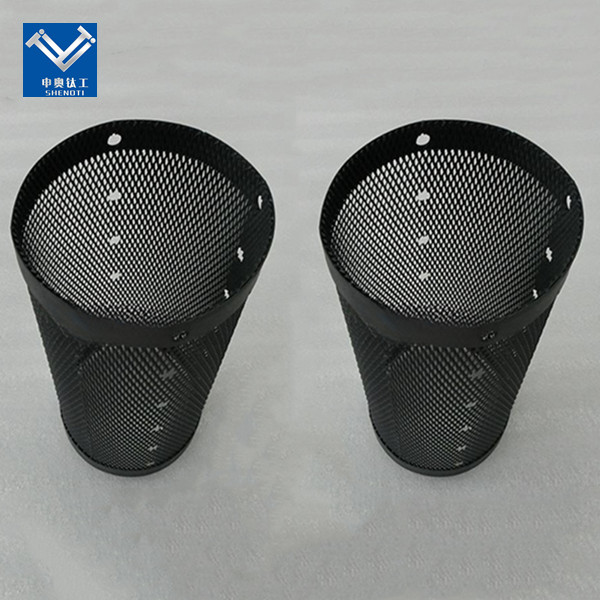
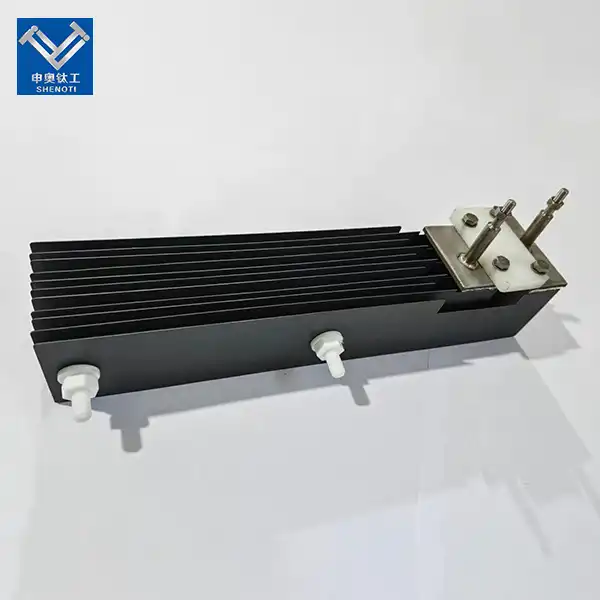
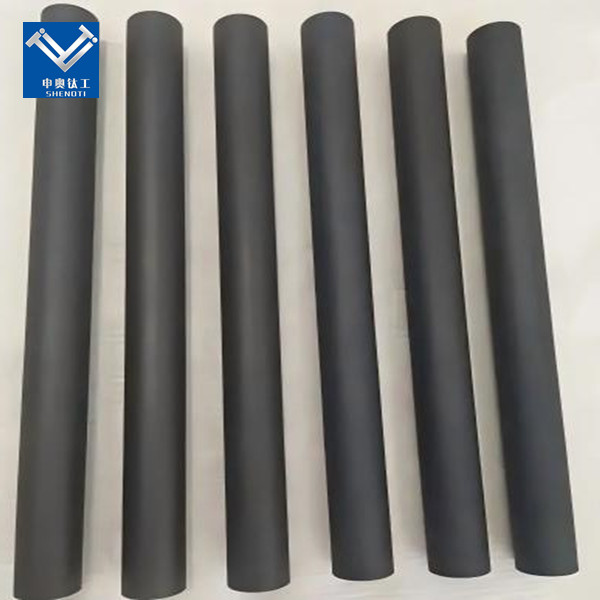
Tantalum-iridium titanium anode


Coating: Ruthenium-Iridium Mixed Metal Oxide (Ru-Ir MMO)
Coating Structure: Dense and highly conductive catalytic layer
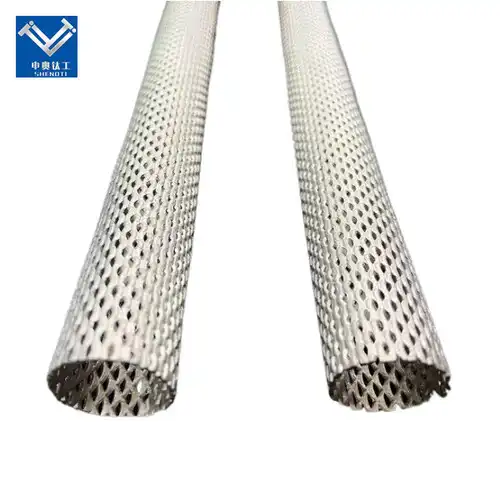
Custom made: Plate, Mesh, Tube, Rod, and Customed
Expected Lifespan: Extended service durability under rated operating conditions
Advantage:
High electrocatalytic activity
Strong corrosion resistance
Long service life
Dimensionally stable
Tantalum-Iridium Titanium Anode
In extreme operating conditions where strongly acidic environments coexist with vigorous oxygen evolution, conventional anode coatings often struggle to balance activity and service life. Our Tantalum-Iridium Titanium Anode at Baoji City ShenAo Metal Materials Co., Ltd. is engineered specifically to meet these demanding conditions. It uses Grade 1 or Grade 2 pure titanium as the substrate, with a tantalum-iridium binary or multi-component mixed metal oxide catalytic layer on the surface. The iridium component provides stable oxygen evolution electrocatalytic activity, while the introduction of tantalum imparts excellent chemical stability and structural integrity to the coating under strong acid and high potential conditions. This formulation makes the tantalum-iridium titanium anode a reliable choice capable of withstanding long-term service in extreme environments, across applications including acidic water electrolysis, steel strip electroplating, metal foil electrodeposition, advanced oxidation for industrial wastewater, and hydrometallurgy.
Technical Specifications
|
Substrate Material |
Grade 1/2 Pure Titanium |
|
Coating Type |
Tantalum-Iridium Mixed Metal Oxide (Ta₂O₅-IrO₂), with optional optimization via tin, cobalt, and other elements |
|
Coating Thickness |
5–20 μm (adjusted based on current density and operating environment) |
|
Coating Loading |
10–200 g/m² (customized for rated current density) |
|
Current Density Range |
100–5,000 A/m² (adjusted based on application type) |
|
Operating Voltage Window |
0.8 V–4.0 V (typical oxygen evolution potential range) |
|
Applicable Media |
Sulfuric acid, nitric acid, chromic acid, acidic plating solutions, strongly oxidizing electrolytes |
Why Choose Our Titanium Anodes?
- Coating Stability in Strong Acid Environments
The addition of tantalum significantly enhances the coating's chemical resistance in strongly oxidizing acids such as sulfuric acid and nitric acid. Compared to pure iridium coatings, the tantalum-iridium composite coating is less susceptible to selective component dissolution during high-potential oxygen evolution, maintaining stable catalytic activity in acidic plating solutions, acidic wastewater, and hydrometallurgical electrolytes. - Excellent Durability Under Oxygen Evolution Conditions
Iridium is noted among noble metals for its resistance to oxygen evolution corrosion, and the incorporation of tantalum further reinforces the coating's structural stability. In processes requiring prolonged continuous oxygen evolution—such as acidic water electrolysis for hydrogen production, continuous steel strip electroplating lines, and metal foil electrodeposition—the tantalum-iridium coating maintains a low consumption rate even under high current density. - Versatile Form Customization
We can supply anodes in plate, expanded mesh, woven mesh, tubular, rod, and other configurations to suit your electrolyzer design. Whether your setup requires flat plate anodes for filter-press cells, mesh anodes for continuous electroplating lines, or tubular electrodes for shell-and-tube reactors, a compatible structural design is available. - Established Recoating Service
When the tantalum-iridium coating reaches the end of its service life, the titanium substrate typically retains good structural integrity. We offer professional substrate inspection, old coating removal, and recoating services to restore your anodes to their original performance. This remanufacturing approach can yield meaningful long-term savings compared to purchasing new anodes.
|
|
|
|
|
|
|
|
|
|
|
|




Real-World Applications
- Acidic Water Electrolysis for Hydrogen Production: On the anode side of PEM electrolyzers, withstanding strongly acidic environments and vigorous oxygen evolution, serving as a key component in hydrogen production.
- Steel Strip and Metal Foil Electrodeposition: Used in continuous electrodeposition lines for electrolytic copper foil, tinplate steel, and similar applications, providing uniform current distribution and long-term dimensional stability under strong acid and high current density conditions.
- Electroplating and Surface Treatment: In strongly acidic plating processes such as hard chrome plating, acidic zinc plating, and anodizing, serving as an insoluble anode to provide stable operating potential.
- Advanced Oxidation for Industrial Wastewater: In treating industrial wastewater containing phenols, cyanides, or high COD levels, generating hydroxyl radicals on the anode surface to achieve efficient degradation of recalcitrant organic compounds.
- Hydrometallurgy and Metal Recovery: In the electrowinning of copper, nickel, zinc, cobalt, and other metals from acidic solutions, replacing traditional lead anodes to avoid lead dissolution and cathode product contamination.


The ShenAo Advantage
18 Years of Manufacturing Excellence
Since 2008, we've specialized in valuable metal coated titanium anodes from our office in Baoji's "China Titanium Valley." Our develop bimetallic hazardous welding innovation and progressed coating forms provide items you can trust.
Customization for Your Correct Needs
Every generation line is diverse. We give custom fitted arrangements coordinating your particular current thickness necessities, electrolyte composition, and operational parameters. Whether you require little bunch testing or full-scale generation amounts, we convey on time.
Cost-Effective Lifecycle Management
When coating exhaustion happens, you do not dispose of the whole anode. Our proficient recoating benefit strips the ancient oxide layer, sandblasts the substrate, and reapplies new MMO coating. This expands resource life and decreases your add up to taken a toll of proprietorship considerably.

Frequently Asked Questions
Q: What advantages does a tantalum-iridium titanium anode offer over a pure iridium coated anode?
A: Pure iridium coatings already demonstrate good durability in oxygen evolution environments. However, under strong acid conditions (such as concentrated sulfuric acid or nitric acid) and high potential, the iridium component in the coating may undergo selective dissolution, leading to a gradual decline in activity. The introduction of tantalum forms a more stable oxide framework within the coating, suppressing this dissolution process and enabling a longer effective service life under extreme conditions where strong acid and high potential coexist.
Q: What is the difference in application scenarios between tantalum-iridium and ruthenium-iridium titanium anodes?
A: Ruthenium-iridium titanium anodes hold an advantage in environments with chloride ions, as ruthenium offers high chlorine evolution activity. However, in strongly acidic environments dominated by oxygen evolution (such as acidic water electrolysis, hard chrome plating, and hydrometallurgy), tantalum-iridium titanium anodes provide better chemical stability. In simple terms: choose the ruthenium-iridium system when the medium contains significant chlorides; choose the tantalum-iridium system when the medium is primarily strong acid with oxygen evolution.
Q: How is the tantalum-to-iridium ratio in the coating determined?
A: This depends on the acidity strength of your electrolyte and the proportion of oxygen evolution. In scenarios with higher acidity and more intense oxygen evolution, the tantalum ratio should be appropriately increased to enhance chemical stability. The iridium ratio determines the initial oxygen evolution catalytic activity of the coating. You can provide your electrolyte composition, acid concentration, and operating current density, and our engineers will recommend a suitable ratio.
Q: Are tantalum-iridium titanium anodes suitable for environments containing fluoride ions?
A: This requires careful evaluation. Fluoride ions attack not only the titanium substrate but also the tantalum-iridium coating itself. If the fluoride ion concentration in your electrolyte exceeds 10 ppm, we recommend consulting with us, as a niobium substrate or special protective solution may be needed. It is important to inform us of fluoride and other impurity levels during the selection stage.
Q: Can used tantalum-iridium titanium anodes be recoated?
A: Yes. Our recoating process includes: incoming inspection of used anodes → substrate appearance and dimensional inspection → chemical stripping of old coating → substrate blasting or pickling treatment → new coating application → performance testing → shipment. A recoating cycle can yield meaningful overall cost savings. We recommend planning ahead as the anode approaches the end of its service life to avoid unplanned production line downtime.
_1776732179859.jpg "mixed metal oxide coated titanium anodes")