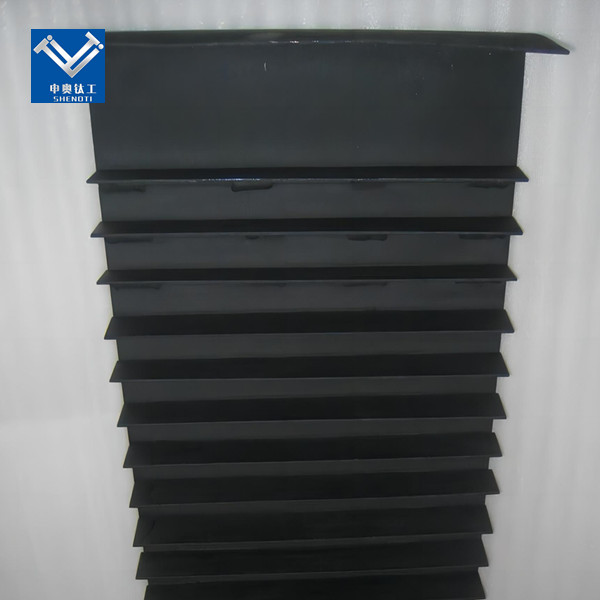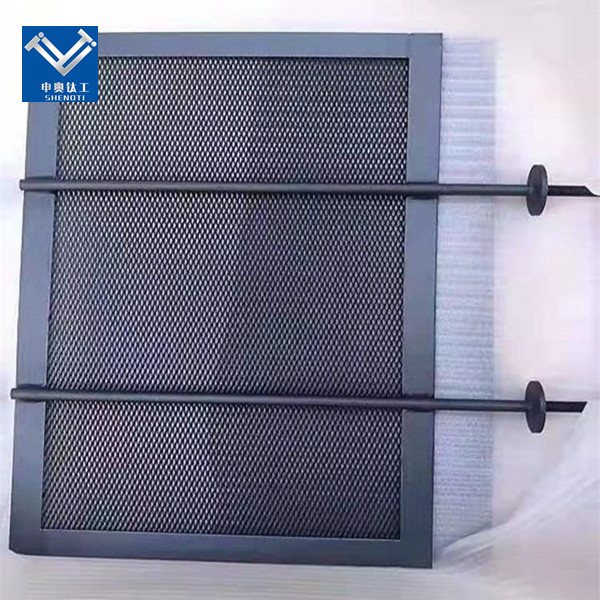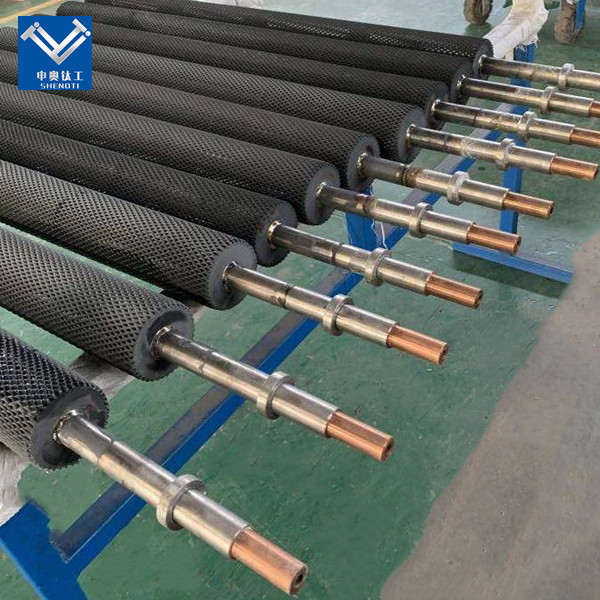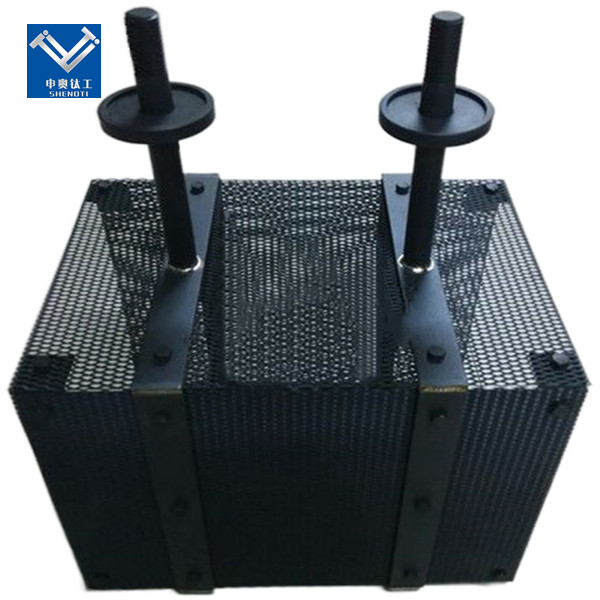
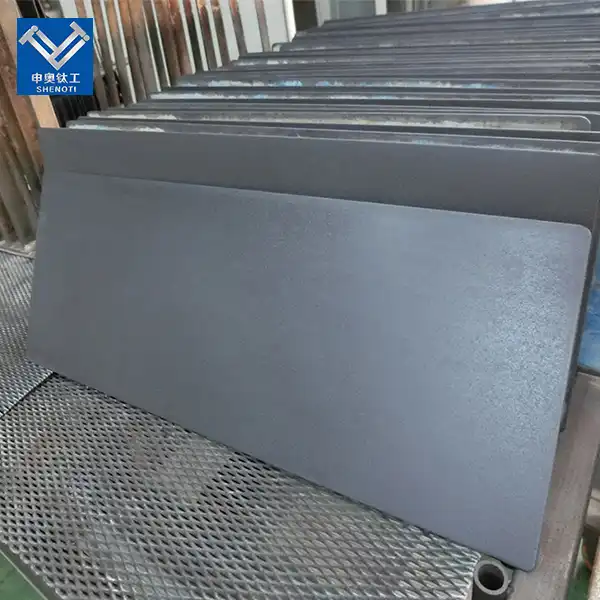
MMO Coated Titanium Insoluble Anode for Chrome Plating


Coating: Mixed Metal Oxide (MMO)
Coating Structure: Dense and highly conductive catalytic layer
Custom made: Plate, Mesh, Tube, Rod, and Customed
Expected Lifespan: Engineered for reliable endurance in continuous service
Advantage:
High electrocatalytic activity
Strong corrosion resistance
Long service life
Dimensionally stable
MMO Coated Titanium Insoluble Anode for Chrome Plating
In chromium plating processes, the electrochemical characteristics of the anode material have a direct influence on bath stability, deposit quality, and production line operating costs. Conventional lead alloy anodes continuously dissolve during operation, generating lead-containing sludge and gradually altering electrode spacing, posing an ongoing contamination risk to both the bath and plated part quality. Our MMO Coated Titanium Insoluble Anode for Chrome Plating at Baoji City ShenAo Metal Materials Co., Ltd. is designed specifically to replace traditional lead anodes and enable clean, efficient chromium plating. It uses Grade 1 or Grade 2 pure titanium as the substrate, with an iridium-tantalum mixed metal oxide catalytic coating on the surface. The coating maintains stable oxygen evolution catalytic activity in the strongly oxidizing chromic acid bath, providing uniform current distribution across the workpiece surface. The anode maintains a stable chemical state during operation, generates minimal sludge, and minimizes the risk of bath contamination, making it suitable for hard chrome plating, decorative chrome plating, functional chrome plating, and other chromium plating processes, serving as a reliable electrode solution for improving deposit quality and reducing line operation and maintenance costs.
This product is for B2B Industrial Use Only. Operators should follow relevant chemical safety protocols and electroplating operation standards. Products involving traditional chromium plating processes are sold only to qualified professional industrial users.
Technical Specifications
|
Substrate Material |
Grade 1/2 Pure Titanium |
|
Coating Type |
Iridium-Tantalum Mixed Metal Oxide (IrO₂-Ta₂O₅), formulation optimizable per bath system |
|
Coating Thickness |
5–20 μm (adjusted based on current density and bath acidity) |
|
Coating Loading |
10–200 g/m² (customized for rated current density) |
|
Current Density Range |
200–3,000 A/m² (adjusted based on plating type and rack design) |
|
Operating Voltage Window |
0.5 V–3.0 V (typical chromium plating potential range) |
|
Anode Shapes |
Plate, Mesh, Rod, Custom |
|
Applicable Baths |
Traditional chromium plating baths, hard chrome plating baths, decorative chrome plating baths |
Why Choose Our Titanium Anodes?
- Exceptional Durability of Iridium-Tantalum Coating in Strongly Oxidizing Chromic Acid Baths
Chromium plating baths are primarily composed of chromic acid, with high acidity and strong oxidizing properties, exerting intense corrosive and oxidative attack on metallic electrodes. Our iridium-tantalum coating exhibits a very low corrosion rate under strongly acidic, high-potential conditions, maintaining coating structural integrity during long-term immersion and continuous electroplating operation, without significant activity decay or substrate exposure caused by sustained attack from chromic acid, making it suitable for long-cycle continuous operation of chromium plating lines. - Significantly Reducing Anode Sludge to Lower Bath Maintenance Costs
Traditional lead anodes continuously dissolve during chromium plating and generate lead chromate sludge, contaminating the bath, clogging anode bags, and causing pitting and pinholes on plated part surfaces. Our titanium anode operates as an insoluble anode without self-dissolution, significantly reducing anode sludge generation, contributing to lower bath filtration frequency and waste sludge treatment costs, and improving first-pass yield of plated parts. - Stable Dimensions Ensuring Uniform Electrode Spacing and Current Distribution
Lead anodes gradually corrode and deform during chromium plating, causing changes in the anode-cathode gap and subsequently affecting current distribution uniformity and deposit thickness consistency. Our titanium anode maintains stable dimensions and shape throughout its service life, ensuring consistent spacing for each electrode pair, providing the foundation for uniform deposition across all areas of the plated part and stable cell voltage control. - Multi-Form Customization for Different Chromium Plating Lines
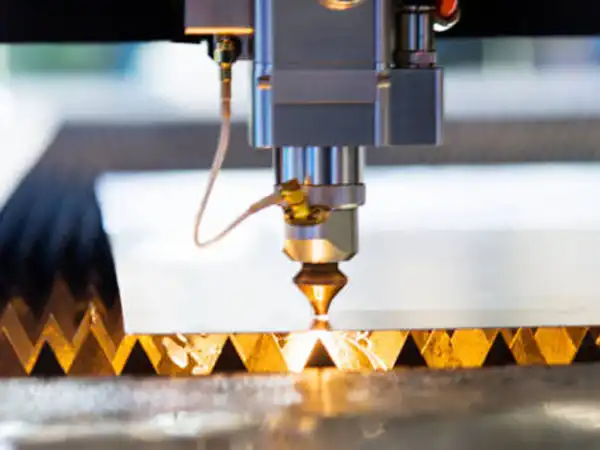
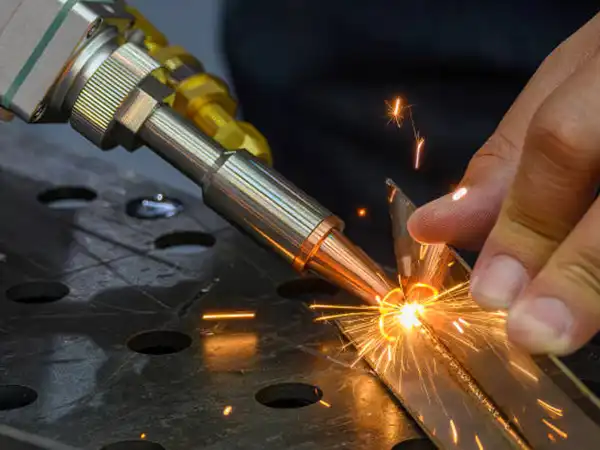
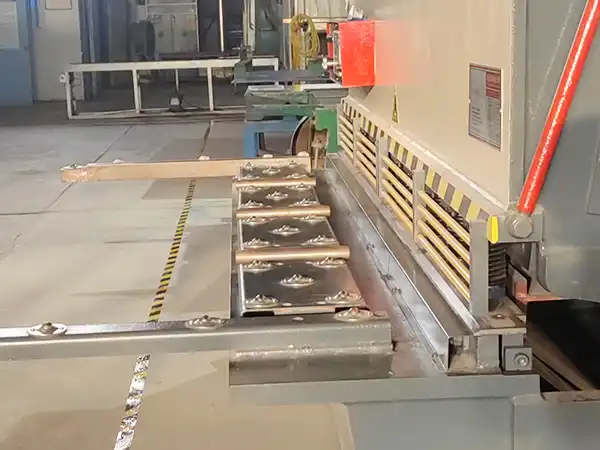
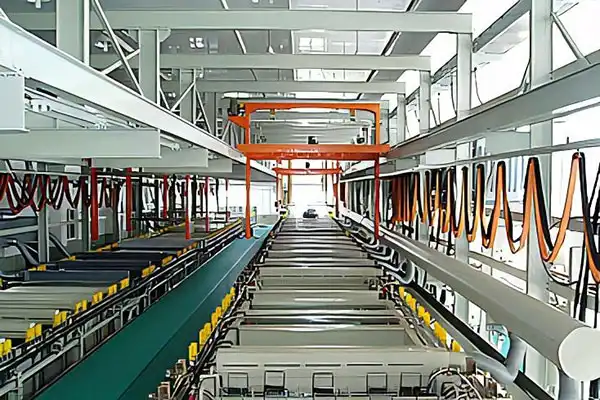
We can supply plate, mesh, and rod anodes, compatible with rack plating lines, barrel plating lines, and continuous chromium plating lines. Plate anodes are suitable for conventional rack plating and continuous chromium plating; mesh anodes are suitable for tanks requiring high open area ratios and gas venting; rod anodes are suitable for deep-hole and irregular workpiece interior chromium plating. Anode profiles, bus bar interfaces, and mounting methods can all be customized for convenient integration with existing production lines.
|
|
|
|
|
|
|
|
|
|
|
|




Real-World Applications
- Automotive Component Chrome Plating: Used in hard chrome plating lines for automotive components such as piston rods, hydraulic cylinders, shock absorber rods, and engine valves, providing stable current output and long-term dimensional reliability for wear-resistant and corrosion-resistant coatings.
- Mold and Roller Chrome Plating: Used in hard chrome plating lines for industrial components such as plastic molds, stamping dies, paper mill rollers, and printing rollers, covering mold repair chrome plating and roller functional chrome plating processes.
- Sanitary Ware and Consumer Goods Decorative Chrome Plating: Used in decorative chrome plating lines for faucets, shower heads, valves, and household decorative items, ensuring product appearance brightness, consistency, and corrosion resistance.
- Industrial Equipment and Mechanical Component Chrome Plating: Used in functional chrome plating lines for construction machinery pistons, marine components, and heavy equipment assemblies, providing a reliable anode solution for wear protection under demanding operating conditions.


The ShenAo Advantage
18 Years of Fabricating Excellence
Since 2008, we've specialized in valuable metal coated titanium anodes from our office in Baoji's "China Titanium Valley." Our develop bimetallic hazardous welding innovation and progressed coating forms provide items you can trust.
Customization for Your Correct Needs
Every generation line is diverse. We give custom fitted arrangements coordinating your particular current thickness necessities, electrolyte composition, and operational parameters. Whether you require little bunch testing or full-scale generation amounts, we convey on time.
Cost-Effective Lifecycle Management
When coating exhaustion happens, you do not dispose of the whole anode. Our proficient recoating benefit strips the ancient oxide layer, sandblasts the substrate, and reapplies new MMO coating. This expands resource life and decreases your add up to taken a toll of proprietorship considerably.

Frequently Asked Questions
Q: What are the main advantages of iridium-tantalum coated titanium anodes compared to traditional lead alloy anodes in chromium plating lines?
A: The main advantages are reflected in three aspects: first, significantly reduced sludge generation—lead anodes continuously dissolve in chromium plating baths and generate lead chromate sludge, contaminating the bath and clogging anode bags, whereas titanium anodes generate minimal sludge; second, stable dimensions ensuring consistent electrode spacing—lead anodes gradually corrode and deform, while titanium anodes maintain dimensional stability throughout their service life; third, lower risk of bath contamination—titanium anodes do not dissolve lead ions, helping maintain the chemical balance of the bath and deposit quality.
Q: Is there a difference in anode coating selection between hard chrome plating and decorative chrome plating?
A: Both use chromic acid as the main component, with the oxygen evolution reaction dominating at the anode side, and iridium-tantalum formulations are recommended for both in terms of coating selection. Hard chrome plating typically operates at higher current densities (1,500–3,000 A/m²), placing greater demands on coating durability, and a higher iridium loading is recommended. Decorative chrome plating operates at relatively lower current densities (500–1,500 A/m²), for which standard loading is sufficient. You can provide your specific process parameters, and our engineers will recommend a matched solution.
Q: How are the area and arrangement of titanium anodes determined?
A: They are primarily determined based on tank dimensions, workpiece loading capacity, set current density, and anode-cathode spacing. Insufficient anode area leads to excessively high localized current density and accelerated coating consumption, while excessive area increases equipment cost. The anode-cathode spacing is typically set within the range of 10–30 cm depending on workpiece dimensions and bath conductivity. We can recommend suitable anode dimensions, quantity, and arrangement based on your tank drawings and process parameters.
Q: How should anodes be handled when the coating reaches the end of its service life?
A: The titanium substrate remains stable in the chromic acid environment. The old coating can be chemically stripped, and once the substrate passes inspection, it can be recoated to restore performance to new-anode levels. We offer a full-service process including incoming inspection of used anodes, coating stripping, substrate treatment, and recoating, which can yield meaningful long-term savings compared to purchasing entirely new anodes.
Contact Us
You need a partner who not only supplies products but also solves your challenges alongside you. Our team is ready to engage with your inquiries and provide a tailored solution. Share your specific needs or key requirements with us today, and let us help you efficiently transform your breakthroughs into commercial value.
Titanium Anode Manufacturer
Email: zh@baojiti.com.cn
WhatsApp: +86-15877696471 (updated)
Products: Titanium Anodes, MMO Titanium Anodes, DSA Coated Titanium Electrodes, Electrolysis Electrodes, Hydrogen Production Electrodes, Wastewater Treatment Titanium Anodes.