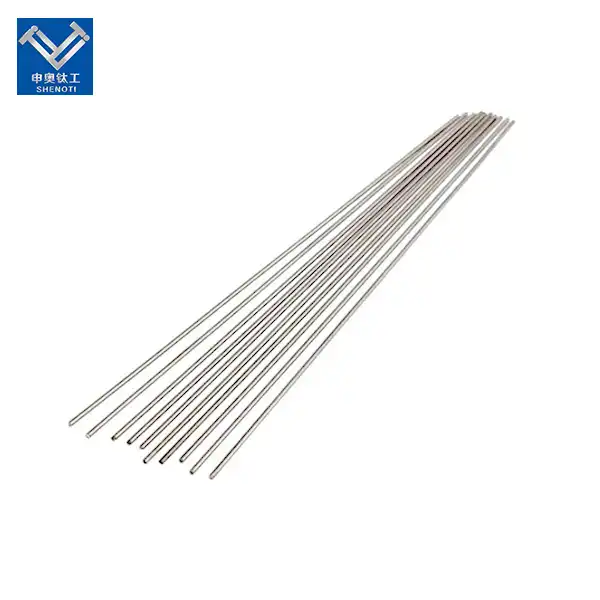
Platinized Titanium Wire Anode


Coating Type: Pure Platinum (Pt)
Coating Loading: 1.0 – 30 g/m² (Customized per Application)
Coating Structure: Dense, highly conductive noble metal active layer
Current Density Range: 50 – 3,000 A/m² (Customizable for Your Process)
Operating Voltage Window: 0.5 V – 2.5 V (Typical Electrochemical Range)
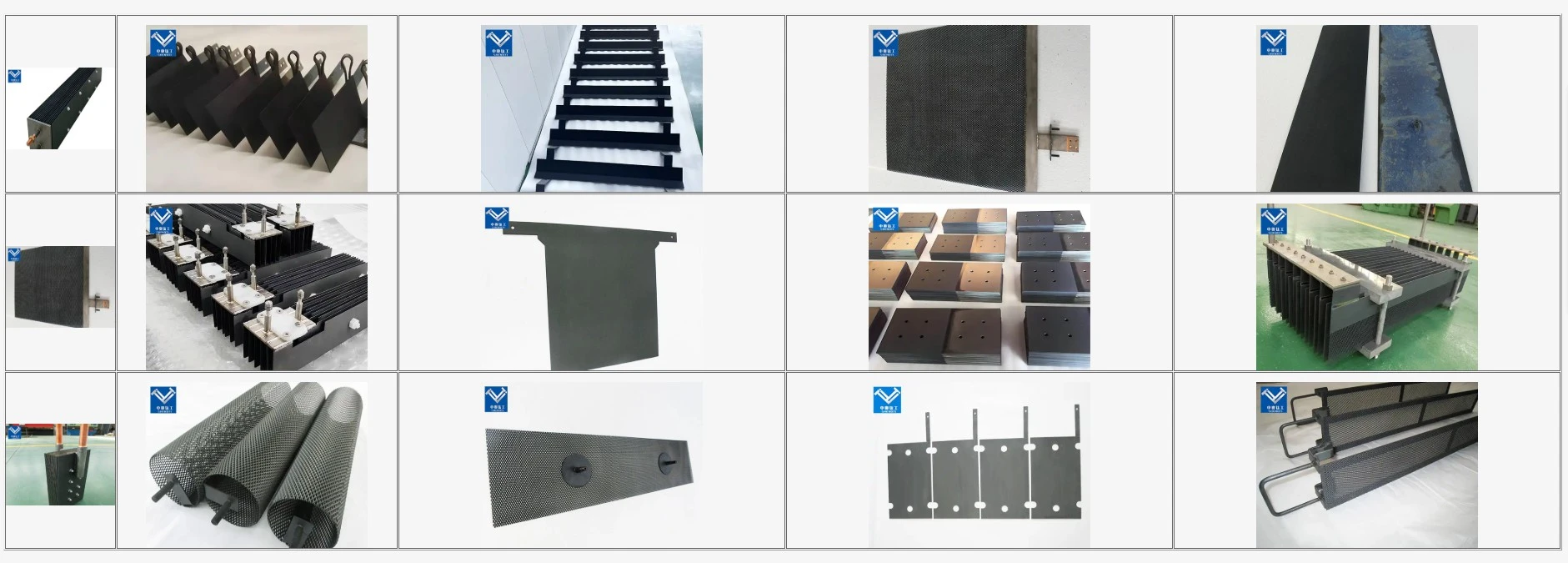
Anode Shapes: Wire, Coiled Wire, Spiral Wire, Woven Mesh Wire, Custom
Expected Lifespan: 8,000 – 25,000 hours (Depending on Operating Conditions)
Platinized Titanium Wire Anode
In precision electroplating, electrochemical analysis, and cathodic protection applications, the dimensional accuracy and current distribution uniformity of the anode often determine process success. Our Platinized Titanium Wire Anode at Baoji City ShenAo Metal Materials Co., Ltd. is built to meet the demands of such precision-critical and reliability-intensive scenarios. It uses Grade 1 or Grade 2 pure titanium wire as the substrate, with a dense pure platinum coating applied via electrodeposition or thermal decomposition. The platinum layer provides excellent corrosion resistance and stable oxygen/chlorine evolution potentials, while the titanium wire core delivers sufficient mechanical strength and flexibility. Whether serving as a reference electrode, auxiliary electrode, or anode probe in micro-electroplating, this product delivers stable and long-lasting performance.
Why Choose Our Titanim Anodes?
- Excellent Corrosion Resisutance of the Platinum Layer
Pure platinum exhibits outstanding chemical inertness in most acidic and chloride-containing environments, with a very low annual consumption rate. For processes requiring long-term continuous operation, the platinum coating maintains stable electrochemical activity, reducing voltage drift and treatment effectiveness decline caused by coating wear. - Superior Conductivity and Uniform Current Distribution
Platinum itself has good electrical conductivity, and combined with the excellent conductive cross-section of the titanium wire substrate, the entire anode maintains low resistance from the connection point to the tip. In linear or spiral configurations, current is released uniformly along the wire, avoiding accelerated coating consumption caused by localized current concentration. - Flexible Geometric Adaptability
Titanium wire offers good workability, allowing us to produce straight wire, coiled wire, spiral wire, or woven mesh wire configurations. This flexibility means that no matter how constrained your electrolytic cell space is, a suitable installation solution can be found. - Lightweight and Portable for Precision Applications
Compared to plate or tubular anodes, wire anodes are compact and lightweight, making them particularly suitable for laboratory electrochemical workstations, micro-electroplating baths, sensor packaging, and other applications with strict space and weight requirements.
Technical Specifications
|
Substrate Material |
Grade 1/2 Pure Titanium Wire |
|
Coating Type |
Pure Platinum (Pt) |
|
Coating Thickness |
1–10 μm (adjusted based on current density and application environment) |
|
Coating Loading |
1.0–30 g/m² (customized for rated current density) |
|
Current Density Range |
50–3,000 A/m² (adjusted based on application type) |
|
Operating Voltage Window |
0.5 V–2.5 V (typical electrochemical range) |
|
Wire Diameter |
Φ0.5mm–Φ6mm (common), other specifications available upon request |
|
Applicable Media |
Acidic solutions, chloride-containing electrolytes, neutral electrolytes, electroplating solutions |
Real-World Applications
- Precision Electroplating and Precious Metal Plating: Used in precision electroplating processes for electronic components, connectors, and semiconductor packaging, providing stable and uniform current output while avoiding impurity dissolution that could contaminate the plating bath.
- Electrochemical Analysis and Sensors: Serving as reference electrodes or auxiliary electrodes in electrochemical workstations, water quality monitoring sensors, gas detection electrodes, and other analytical applications.
- Cathodic Protection: Applied for localized cathodic protection of small metal components, inner walls of heat exchanger tube bundles, tank interiors, and other space-constrained areas.
- Laboratory Research and Process Development: In electrolytic synthesis, electrodeposition, electrochemical testing, and other research scenarios, platinized titanium wire anodes are a common choice for building small-scale experimental setups.
- Medical and Precision Instruments: Applied in electrochemical treatment for medical devices and as electrode assemblies in micro-electrochemical reactors within precision instruments.
The ShenAo Advantage
17 A long time of Fabricating Excellence
Since 2008, we've specialized in valuable metal coated titanium anodes from our office in Baoji's "China Titanium Valley." Our develop bimetallic hazardous welding innovation and progressed coating forms provide items you can trust.
Customization for Your Correct Needs
Every generation line is diverse. We give custom fitted arrangements coordinating your particular current thickness necessities, electrolyte composition, and operational parameters. Whether you require little bunch testing or full-scale generation amounts, we convey on time.
Cost-Effective Lifecycle Management
When coating exhaustion happens, you do not dispose of the whole anode. Our proficient recoating benefit strips the ancient oxide layer, sandblasts the substrate, and reapplies new MMO coating. This expands resource life and decreases your add up to taken a toll of proprietorship considerably.

Product production process
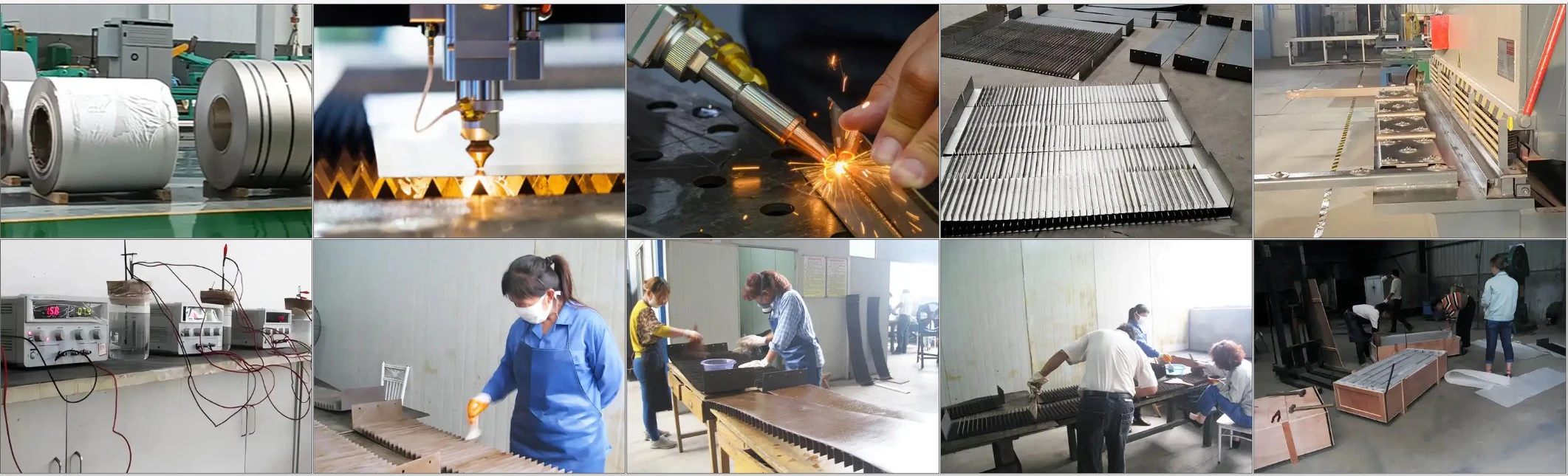
Our Factory

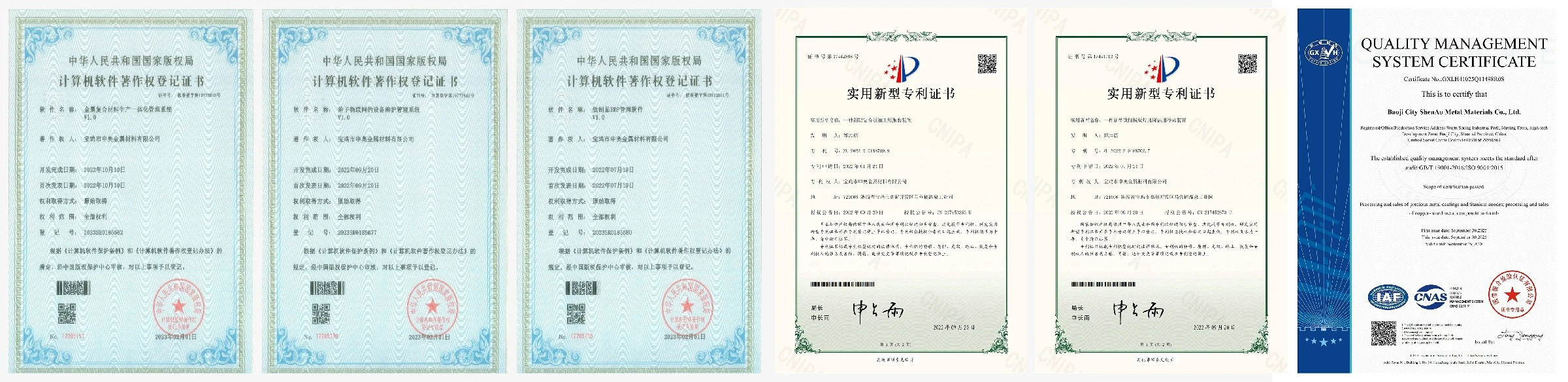
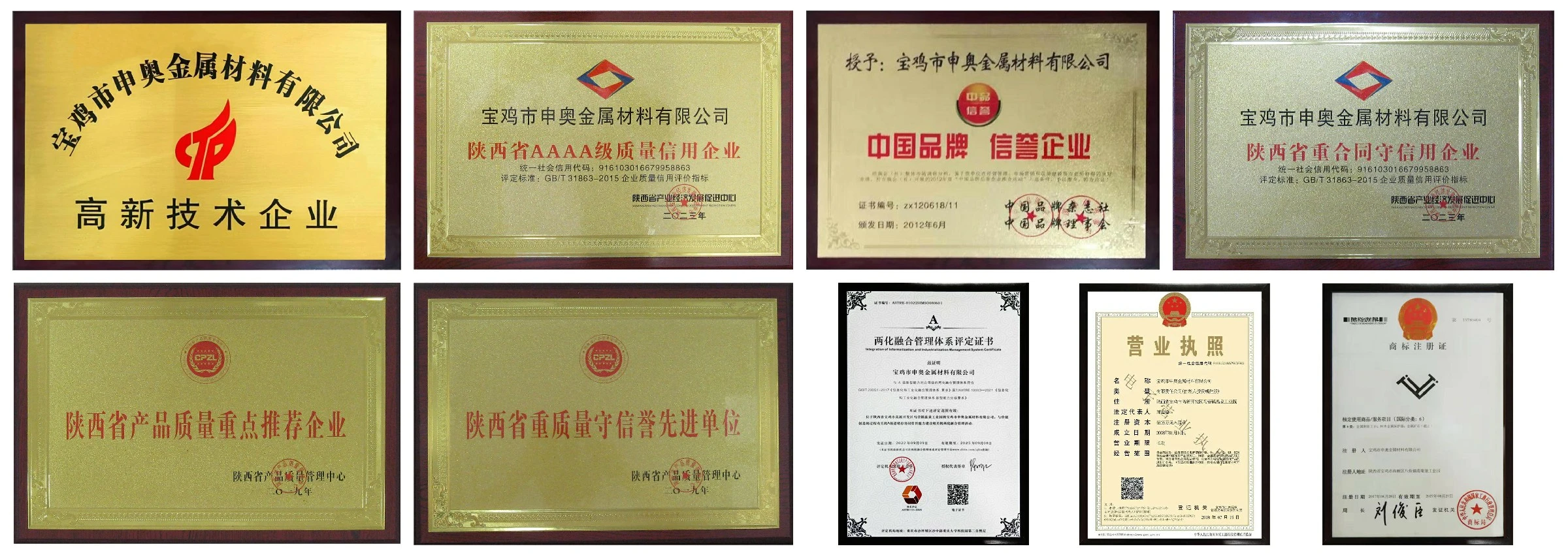
Our Patents and Honors
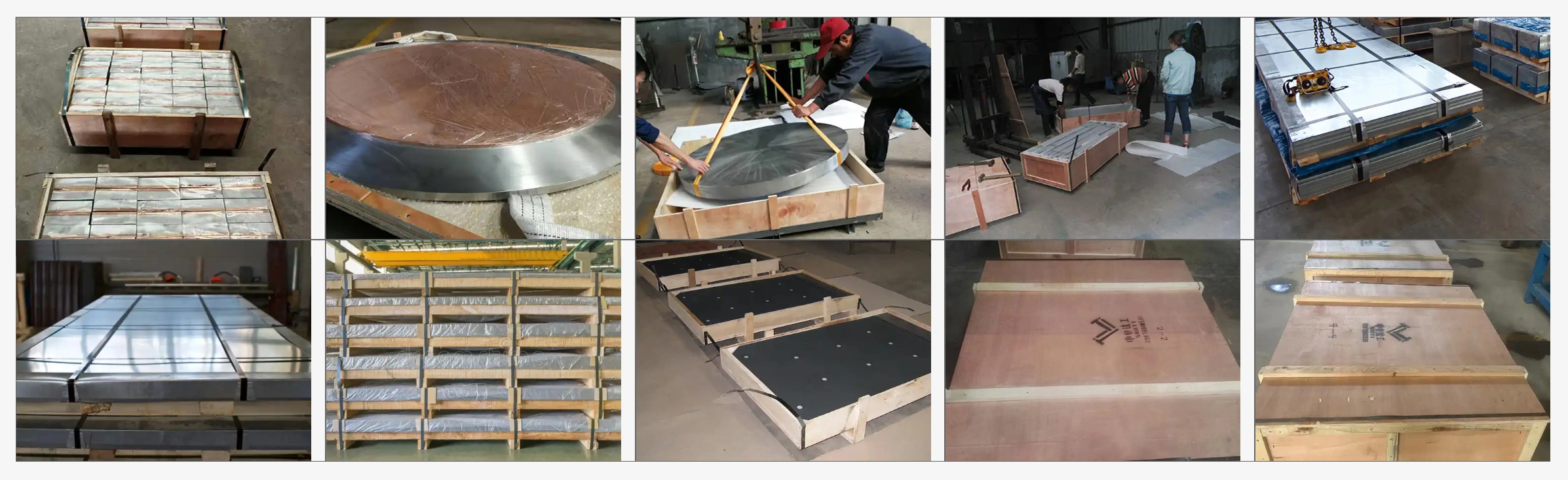
Our Packaging
Frequently Asked Questions
Q: How do I choose between a platinized titanium wire anode and an MMO-coated wire anode?
A: The choice depends primarily on your working medium and potential requirements. Platinum coatings perform well in acidic and chloride-containing media, with a moderate oxygen evolution overpotential. MMO coatings offer higher catalytic activity for oxygen and chlorine evolution, but in certain strong acids or solutions containing complexing agents, platinum's chemical inertness is superior. If your application involves organic solvents or has specific catalytic selectivity requirements, we recommend sharing your operating conditions so our engineers can assist with selection.
Q: Will the platinum coating peel off from the titanium wire substrate?
A: Under normal operating conditions, the platinum coating forms a sound metallurgical bond with the titanium substrate and is not prone to peeling. However, if the current density significantly exceeds the rated value, the electrolyte contains fluoride ions, or the wire is subjected to frequent mechanical bending, the bond strength may be affected. We recommend operating within rated parameters and avoiding mechanical stress on the coated section.
Q: How does wire diameter selection affect performance?
A: Wire diameter directly influences current-carrying capacity and mechanical strength. Thicker diameters (above Φ3mm) are suitable for higher currents and offer better rigidity; thinner diameters (below Φ1mm) provide good flexibility, making them suitable for bending into spiral or custom shapes. Typically, we recommend an appropriate wire diameter based on your total current requirement and the suggested current density range.
Q: How are the end connections of platinized titanium wire anodes handled?
A: Common connection methods include direct spot welding of the titanium wire, crimp sleeve connections, and threaded connector joints. For applications requiring sealed penetration through the cell wall, we can provide encapsulation solutions using PTFE or other sealing materials. Please specify your installation method when inquiring, and we will recommend a compatible connection design.
Q: How can I tell if the platinum coating is nearing depletion?
A: The direct indication of platinum coating depletion is a potential shift at areas where the titanium substrate becomes exposed. When you observe an abnormal and sustained increase in cell voltage, or visible exposure of the titanium substrate on the anode surface (darkening or gray spots appearing), it typically indicates the coating is approaching the end of its service life, and replacement or recoating should be considered.
Contact Us
You need a partner who not only supplies products but also solves your challenges alongside you. Our team is ready to engage with your inquiries and provide a tailored solution. Share your specific needs or key requirements with us today, and let us help you efficiently transform your breakthroughs into commercial value.
Titanium Anode Manufacturer
Email: zh@baojiti.com.cn
WhatsApp: +86-15877696471 (updated)
Products: Titanium Anodes, MMO Titanium Anodes, DSA Coated Titanium Electrodes, Electrolysis Electrodes, Hydrogen Production Electrodes, Wastewater Treatment Titanium Anodes.
YOU MAY LIKE