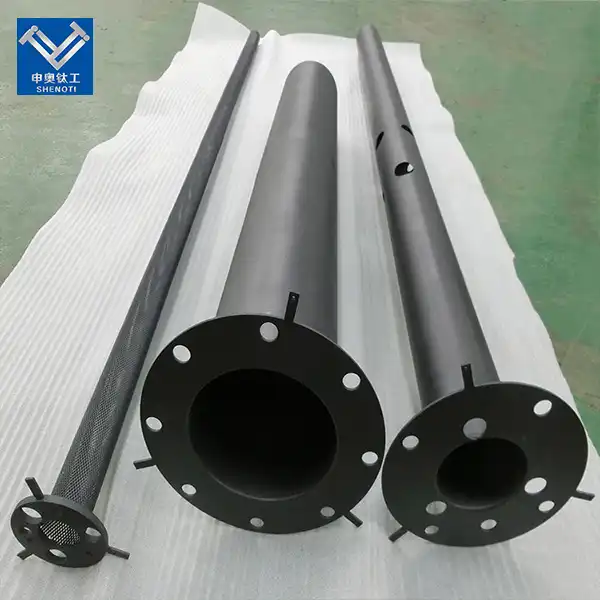
Titanium anode tube for cathodic electrophoretic coating


Coating: Mixed Metal Oxide (MMO)
Coating Structure: Dense and highly conductive catalytic layer
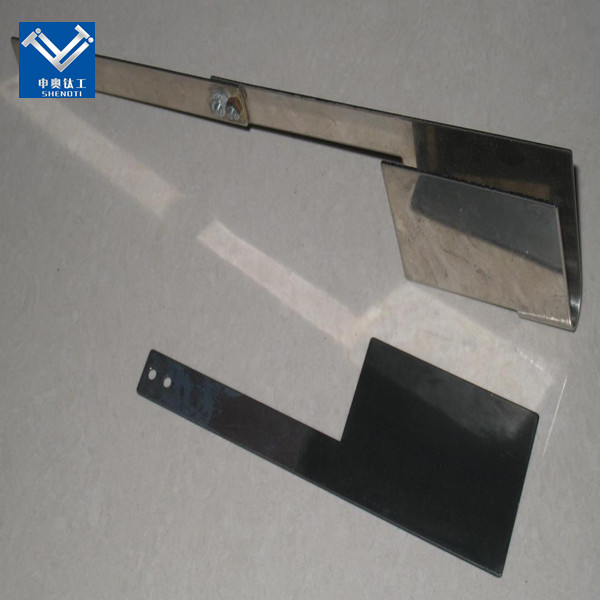
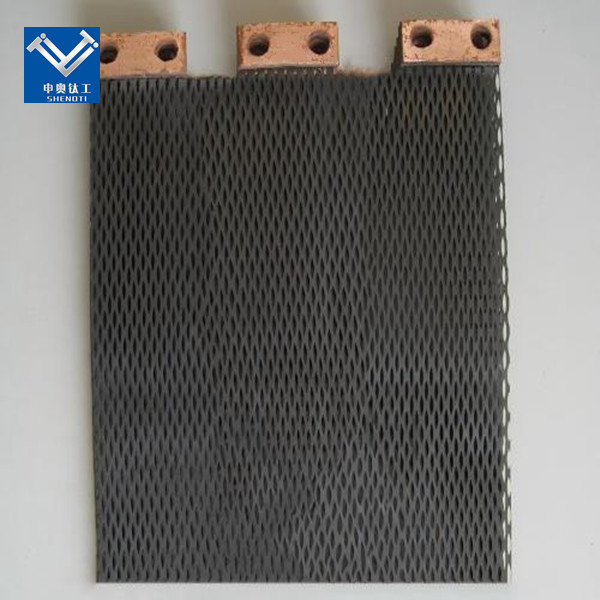
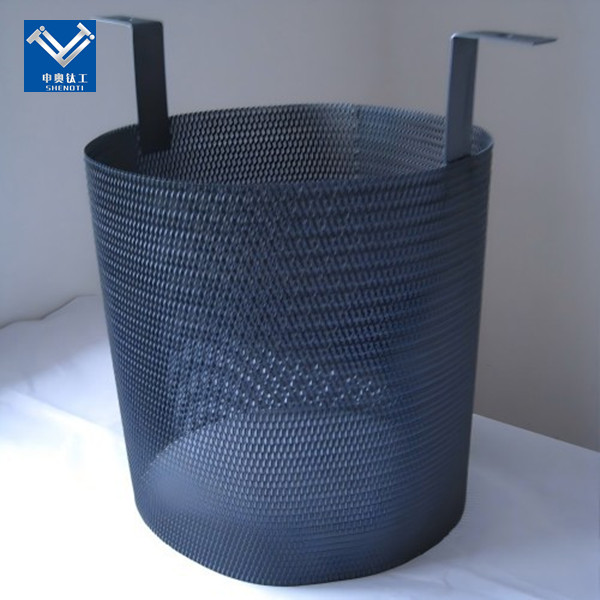
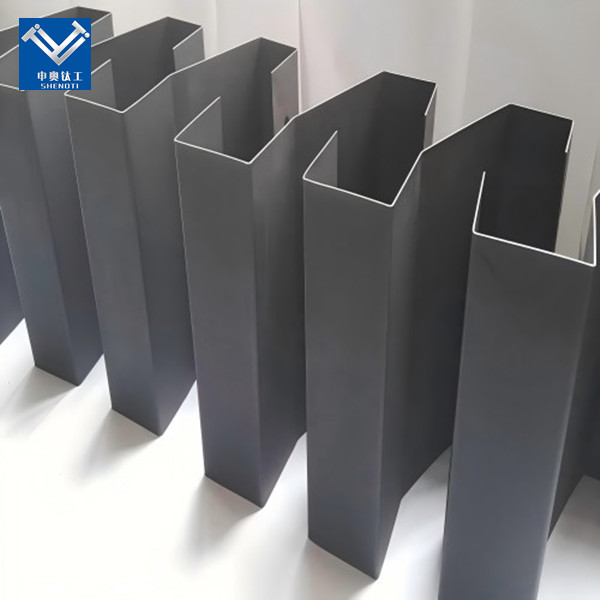
Custom made: Tubular (Standard), Plate, Mesh, and Customed
Expected Lifespan: Capable of consistent output across long-duration applications
Advantage:
High electrocatalytic activity
Strong corrosion resistance
Long service life
Dimensionally stable
Titanium Anode Tube for Cathodic Electrophoretic Coating
In cathodic electrophoretic coating processes, the anode tube serves as a core component for establishing the electric field, with its conductive stability and corrosion resistance directly influencing coating quality and bath life. Our Titanium Anode Tube for Cathodic Electrophoretic Coating at Baoji City ShenAo Metal Materials Co., Ltd. is designed specifically for the efficient and stable operation of electrophoretic coating lines. It uses Grade 1 or Grade 2 pure titanium tube as the substrate, with an iridium-based mixed metal oxide catalytic coating on the surface. The tubular structure, combined with a perforated design, provides ample flow channels for the electrophoretic bath and uniform electric field distribution. The coating maintains a stable oxygen evolution potential during operation with a stable chemical state, minimizing the risk of metal ion dissolution and preventing bath aging and deterioration caused by impurity accumulation. This anode tube is suitable for various cathodic electrophoretic coating production lines, including automotive body coating, component primer application, and appliance housing anti-corrosion treatment, serving as a reliable choice for ensuring coating consistency and long-term bath stability.
Technical Specifications
|
Substrate Material |
Grade 1/2 Pure Titanium Tube |
|
Coating Type |
Iridium-based Mixed Metal Oxide (IrO₂-MMO) |
|
Coating Thickness |
5–15 μm (adjusted based on current density and bath acidity) |
|
Coating Loading |
10–120 g/m² (customized for rated current density) |
|
Current Density Range |
50–500 A/m² (adjusted based on electrophoretic tank design parameters) |
|
Operating Voltage Window |
0.5 V–2.0 V (typical electrophoretic coating potential range) |
|
Tube Diameter |
Φ16mm–Φ48mm (common), other specifications available upon request |
Why Choose Our Titanium Anodes?
- Tubular Perforated Structure for Optimized Bath Circulation
The anode tube features a perforated design, allowing the electrophoretic bath to flow evenly through the tube wall openings, creating favorable liquid exchange at the anode surface. This structure helps carry away gases and heat generated by the oxygen evolution reaction at the anode surface, preventing excessive localized pH decrease and gas retention, and contributing to the stability of the electrochemical environment at the anode surface and the consistency of the coating electric field. - Chemical Stability in Weakly Acidic Baths
Cathodic electrophoretic baths are typically weakly acidic, containing organic acid neutralizers and small amounts of co-solvents, exerting continuous chemical attack on metallic electrodes. Our iridium-based coating maintains a low corrosion rate and good structural integrity in such water-based organic media, minimizing the risk of metal ion dissolution contaminating the bath, making it suitable for long-term continuous operation of electrophoretic coating lines. - Uniform Electric Field Distribution for Consistent Coating
The conductive coating distributed uniformly along the length of the anode tube provides a stable electric field intensity for the workpiece pass-through area. Combined with reasonable anode tube spacing, this effectively improves coating thickness uniformity across the workpiece, reducing coating defects such as thin spots, pinholes, or orange peel caused by uneven electric field distribution. - Convenient Maintenance and Replacement
We can provide anode tube assemblies with standard flanged connections or quick-connect fittings, supporting single-unit or multi-unit combined installation. When an anode tube reaches the end of its service life, it can be independently removed and replaced without replacing the entire assembly. We also offer used anode tube inspection and recoating services, helping you reduce long-term production line operation and maintenance costs.
|
|
|
|
|
|
|
|
|
|
|
|





Real-World Applications
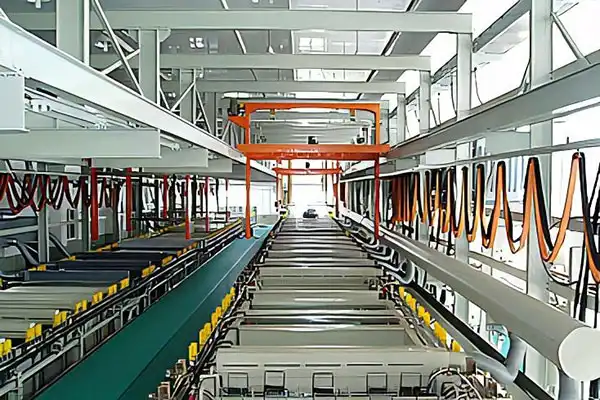
- Automotive Body and Component Primer Coating: Used in cathodic electrophoretic primer coating lines for automotive body-in-white, frames, and chassis components, covering full-immersion e-coat tanks for passenger car bodies, anode box systems for commercial vehicle frames, and anti-corrosion primer coating for chassis parts such as wheels, control arms, and suspension components, delivering uniform and stable electric field distribution for paint deposition.
- Automotive Functional Parts and Accessories Coating: Used in cathodic electrophoretic coating of functional automotive parts such as engine covers, fuel tanks, shock absorbers, and brake discs, covering heat-resistant black coating for engine-compartment components, anti-corrosion treatment for fuel system housings, and stone-chip-resistant coating for suspension springs and stabilizer bars.
- Household Appliance and Office Equipment Enclosure Coating: Used in cathodic electrophoretic coating of sheet metal enclosures for outdoor air conditioner units, washing machine housings, water heater shells, filing cabinets, and computer cases, covering weather-resistant anti-corrosion primers for white goods, high-coverage coatings for office furniture, and edge corrosion protection for electronic equipment enclosures.
- General Industrial Metal Product Surface Corrosion Protection: UUsed in cathodic electrophoretic coating of industrial metal products such as agricultural machinery, construction machinery panels, electrical cabinets, profiles, and tubular components, covering weather-resistant anti-corrosion primers for farm implements, long-term protective coatings for outdoor electrical control cabinets, and decorative black electrophoretic finishes for architectural hardware components.


The ShenAo Advantage
18 Years of Manufacturing Excellence
Since 2008, we've specialized in valuable metal coated titanium anodes from our office in Baoji's "China Titanium Valley." Our develop bimetallic hazardous welding innovation and progressed coating forms provide items you can trust.
Customization for Your Correct Needs
Every generation line is diverse. We give custom fitted arrangements coordinating your particular current thickness necessities, electrolyte composition, and operational parameters. Whether you require little bunch testing or full-scale generation amounts, we convey on time.
Cost-Effective Lifecycle Management
When coating exhaustion happens, you do not dispose of the whole anode. Our proficient recoating benefit strips the ancient oxide layer, sandblasts the substrate, and reapplies new MMO coating. This expands resource life and decreases your add up to taken a toll of proprietorship considerably.

Frequently Asked Questions
Q: What coating is suitable for electrophoretic coating anode tubes?
A: Cathodic electrophoretic baths are typically weakly acidic water-based systems, with the anode tube primarily facilitating the oxygen evolution reaction. Iridium-based coatings demonstrate good oxygen evolution activity and chemical stability in such environments, while resisting attack by organic components in the bath. If your bath contains special additives or co-solvents, you can provide the bath formulation for us to evaluate and confirm coating compatibility.
Q: What is the matching relationship between the titanium anode tube and the anode membrane sleeve?
A: The titanium anode tube serves as the anode conductor and is installed inside the anode membrane sleeve. The sleeve is filled with anolyte (typically ultrafiltrate or deionized water) and separated from the bath solution by an ion exchange membrane. During the coating process, organic acid ions from the bath pass through the membrane sleeve and are electrolytically neutralized by the anode, while the resin and pigments in the bath are blocked by the membrane sleeve. We can provide matched titanium tube and membrane sleeve combinations to ensure concentricity and sealing reliability.
Q: What factors most significantly affect the service life of anode tubes?
A: Key factors include bath acid value, coating voltage, operating temperature, and anolyte circulation conditions. Excessively high bath acid values or poor anolyte circulation can lead to acid concentration accumulation inside the membrane sleeve, accelerating coating corrosion. Regularly monitoring anolyte conductivity and pH, and maintaining stable anolyte circulation flow, are critical measures for extending anode tube service life.
Q: Does a damaged anode membrane sleeve require simultaneous replacement of the titanium tube?
A: Not necessarily. After membrane sleeve damage, first check whether the titanium tube coating has been contaminated or damaged by the bath solution. If the titanium tube coating remains intact, only the membrane sleeve needs replacement for continued use. We provide individual membrane sleeve replacements and titanium tube coating inspection services, allowing assessment of the titanium tube's remaining service life during routine maintenance.
Contact Us
You need a partner who not only supplies products but also solves your challenges alongside you. Our team is ready to engage with your inquiries and provide a tailored solution. Share your specific needs or key requirements with us today, and let us help you efficiently transform your breakthroughs into commercial value.
Titanium Anode Manufacturer
Email: zh@baojiti.com.cn
WhatsApp: +86-15877696471 (updated)
Products: Titanium Anodes, MMO Titanium Anodes, DSA Coated Titanium Electrodes, Electrolysis Electrodes, Hydrogen Production Electrodes, Wastewater Treatment Titanium Anodes.