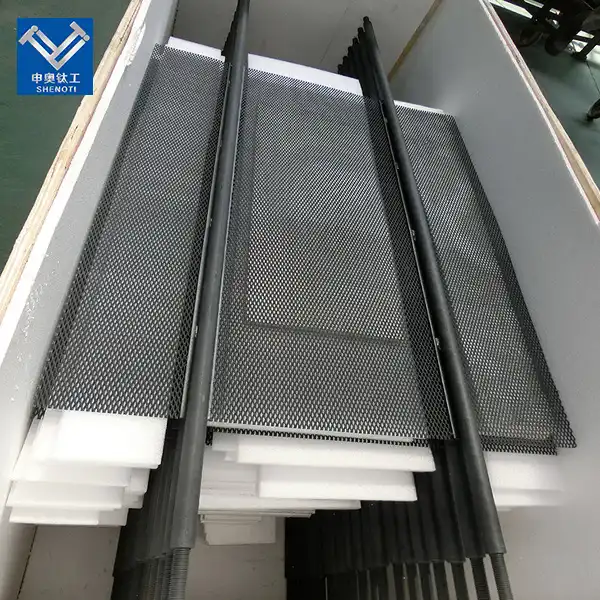
Expanded Titanium Anode Sheet for Chlor-Alkali Cell


Coating: Mixed Metal Oxide (MMO)
Coating Structure: Dense and highly conductive catalytic layer
Custom made: Expanded Mesh (Standard), Plate, and Customed
Expected Lifespan: Capable of consistent output across long-duration applications
Advantage:
High electrocatalytic activity
Strong corrosion resistance
Long service life
Dimensionally stable
Expanded Titanium Anode Sheet for Chlor-Alkali Cell
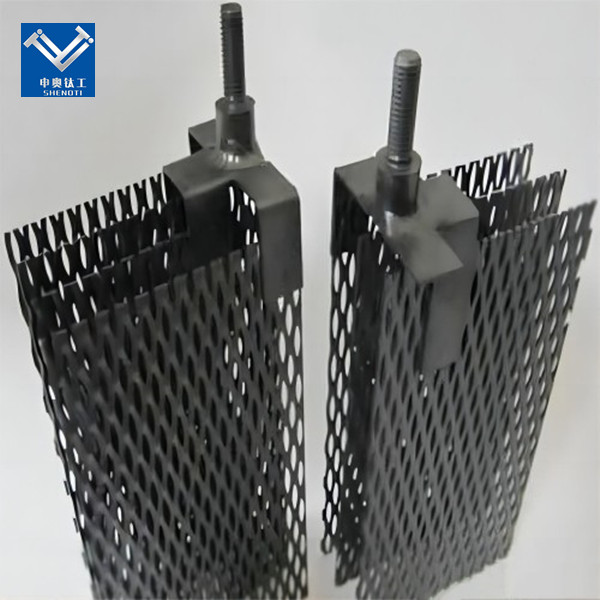
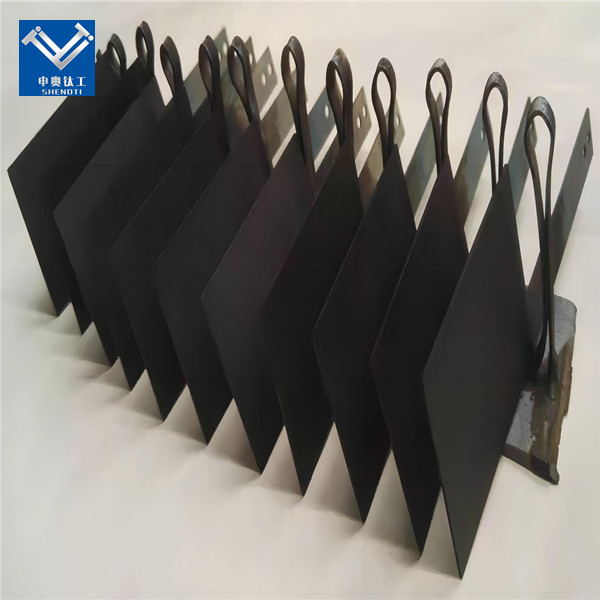
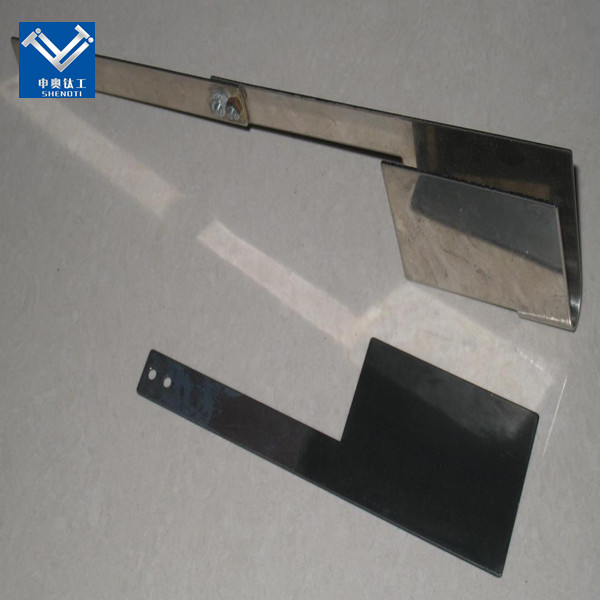
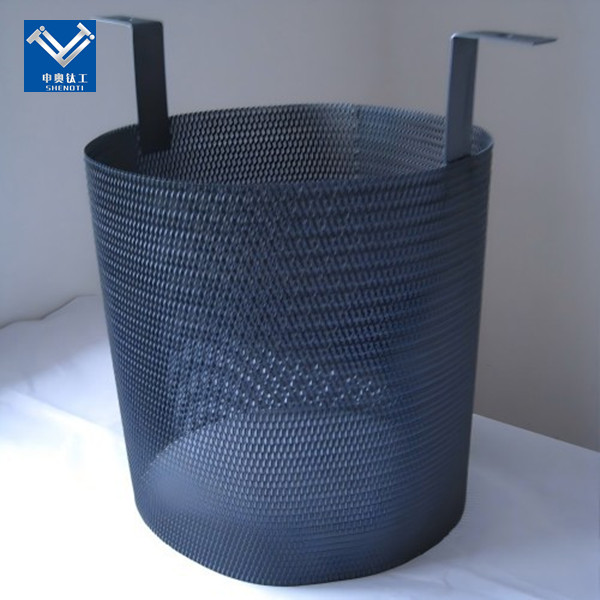
In membrane chlor-alkali electrolyzers, the chlorine evolution catalytic activity, structural design precision, and durability of the anode sheet directly determine electrolysis energy consumption and ion-exchange membrane service life. Our Expanded Titanium Anode Sheet for Chlor-Alkali Cell at Baoji City ShenAo Metal Materials Co., Ltd. is designed specifically for efficient and stable operation in conjunction with membrane electrolyzers. It uses Grade 1 pure titanium sheet processed through precision punching and stretching into expanded mesh as the substrate, with a ruthenium-iridium mixed metal oxide catalytic coating on the surface. The expanded mesh structure provides ample bubble escape channels for the saturated brine within the anode compartment, enabling chlorine bubbles to rapidly detach from the electrode surface and reducing the additional ohmic voltage drop caused by the bubble effect. The ruthenium component imparts a very low chlorine evolution overpotential to the coating in saturated brine, while the introduction of the iridium component enhances the structural stability of the coating during the accompanying oxygen evolution side reaction. This anode sheet is suitable for various types of membrane chlor-alkali electrolyzers, serving as a reliable electrode solution for achieving low cell voltage, high current efficiency, and long-cycle stable operation.
This product is for B2B Industrial Use Only. Operators should follow relevant chemical safety protocols and chlor-alkali electrolysis operation standards.
Technical Specifications
|
Substrate Material |
Grade 1 Pure Titanium Expanded Mesh |
|
Coating Type |
Ruthenium-Iridium Mixed Metal Oxide (RuO₂-IrO₂), formulation optimizable per current density and brine quality |
|
Coating Thickness |
5–20 μm (adjusted based on current density and operating conditions) |
|
Coating Loading |
10–200 g/m² (customized for rated current density) |
|
Current Density Range |
1,000–6,000 A/m² (adjusted based on electrolyzer model and designed capacity) |
|
Operating Voltage Window |
0.5 V–2.0 V (typical chlor-alkali chlorine evolution potential range) |
|
Mesh Specifications |
Diamond hole, round hole, short pitch/long pitch customizable per design requirements |
|
Applicable Media |
Saturated purified brine |
Why Choose Our Titanium Anodes?
- Precision Expanded Mesh Structure Optimized for Bubble Management and Mass Transfer
The titanium expanded anode sheet is formed through a precision punching and stretching process to create uniform and regular diamond or round mesh openings, with open area ratios typically controlled between 30% and 50%. This structure provides smooth flow channels for the high-temperature saturated brine within the anode compartment. Chlorine bubbles can rapidly pass through the mesh openings into the gas-liquid separation zone after formation, reducing bubble residence time and coverage area on the electrode surface. Under high current density operating conditions (4,000–6,000 A/m²), this effectively reduces the additional ohmic voltage drop and localized current density non-uniformity caused by the bubble effect, contributing to stable cell voltage and uniform current distribution across the ion-exchange membrane surface. - Long-Term Stability in High-Temperature Saturated Brine Environments
The anode compartment of membrane electrolyzers presents a highly corrosive environment where high-temperature (80–90°C) saturated brine and wet chlorine gas coexist, placing stringent demands on the chemical stability of the anode coating and the mechanical strength of the substrate. Our ruthenium-iridium coating forms a sound metallurgical bond with the Grade 1 pure titanium expanded mesh substrate, maintaining stable chlorine evolution catalytic activity and structural integrity during long-term high-temperature operation. The excellent ductility of Grade 1 pure titanium ensures that the mesh edges remain free of microcracks during the punching and stretching process, reducing the risk of crevice corrosion in corrosive environments. - Very Low Chlorine Evolution Overpotential for Reduced DC Power Consumption
The ruthenium-iridium coating exhibits a very low chlorine evolution overpotential in saturated brine systems, enabling efficient chlorine evolution at low cell voltage even at industrial-grade current densities. For large-scale chlor-alkali plants with annual capacities of hundreds of thousands of tons of caustic soda, the DC power savings from every 0.1V reduction in cell voltage can be noteworthy over long-term operation, directly improving the comprehensive energy consumption indicators and operating costs of chlor-alkali production. - Proven Solutions Compatible with Mainstream Membrane Electrolyzers
We can provide matched expanded anode sheet dimensions, mesh specifications, and bus bar interface designs based on the anode compartment design parameters of mainstream membrane electrolyzers from manufacturers such as Asahi Kasei, Asahi Glass, De Nora, and Bluestar. The coating formulation of the anode sheet can be optimized according to the actual operating current density and brine quality of the electrolyzer, enabling convenient replacement and seamless compatibility with existing chlor-alkali production lines.
|
|
|
|
|
|
|
|
|
|
|
|

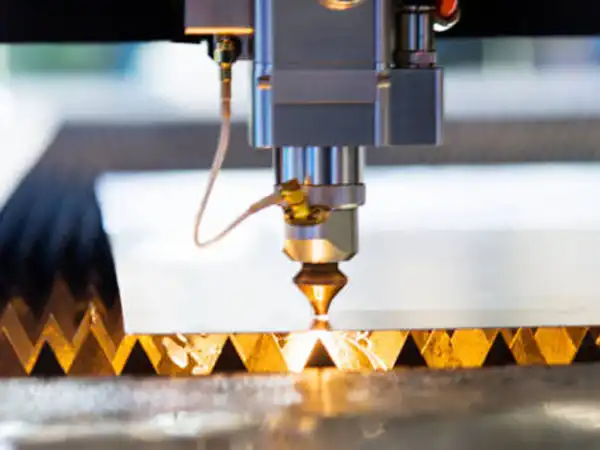
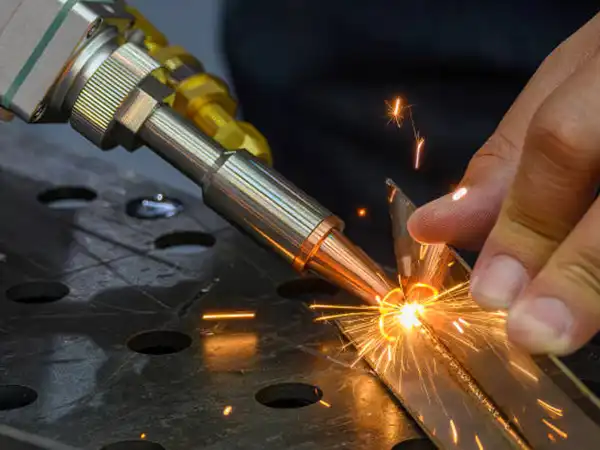

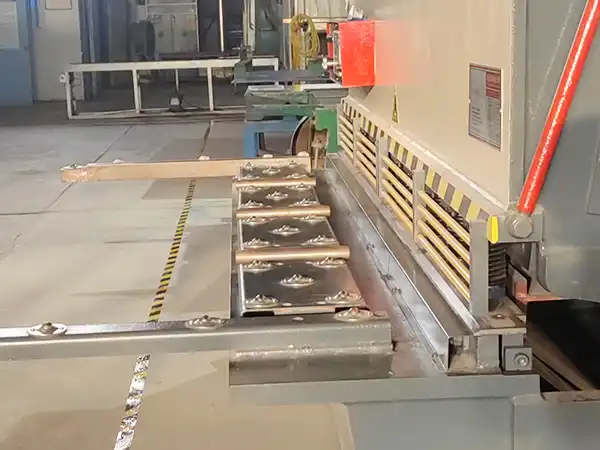


Real-World Applications
- Chlor-Alkali Industrial Production: Used as the core anode assembly in membrane-process caustic soda production units, covering saturated brine electrolysis for chlorine gas and caustic soda production in large-scale chlor-alkali enterprises, providing efficient chlorine evolution anode sheets for electrolyzers with annual capacities of tens to hundreds of thousands of tons of caustic soda.
- Chlorate and Perchlorate Production: Used as anode sheets for the electrolytic production of halogen chemicals such as sodium chlorate, potassium chlorate, and perchlorates, covering deep electrolytic oxidation processes of brine, providing stable chlorine and oxygen evolution catalytic activity in chloride-containing systems.
- Seawater Electrolysis for Chlorine Generation: Used as anode assemblies in large-scale seawater electrolysis chlorine generation units, covering online chlorination equipment for coastal power plant cooling water antifouling and ship ballast water treatment systems.
- Chlor-Alkali Equipment Manufacturing and Maintenance Services: Used for OEM anode sheet supply to chlor-alkali electrolyzer manufacturers, as well as anode replacement and upgrading of existing chlor-alkali plants, providing customized expanded titanium anode sheet manufacturing and recoating services.


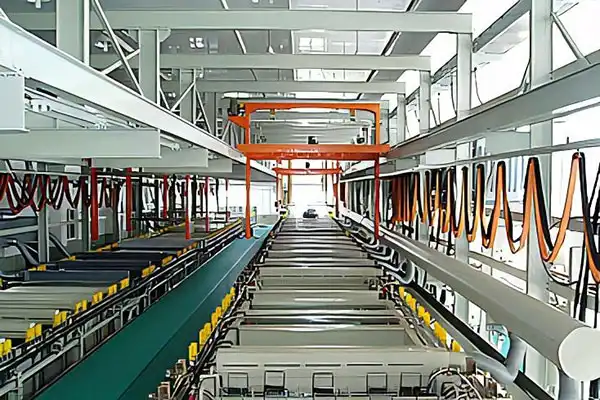
The ShenAo Advantage
18 Years of Fabricating Excellence
Since 2008, we've specialized in valuable metal coated titanium anodes from our office in Baoji's "China Titanium Valley." Our develop bimetallic hazardous welding innovation and progressed coating forms provide items you can trust.
Customization for Your Correct Needs
Every generation line is diverse. We give custom fitted arrangements coordinating your particular current thickness necessities, electrolyte composition, and operational parameters. Whether you require little bunch testing or full-scale generation amounts, we convey on time.
Cost-Effective Lifecycle Management
When coating exhaustion happens, you do not dispose of the whole anode. Our proficient recoating benefit strips the ancient oxide layer, sandblasts the substrate, and reapplies new MMO coating. This expands resource life and decreases your add up to taken a toll of proprietorship considerably.

Frequently Asked Questions
Q: How do the mesh specifications of the expanded anode sheet affect electrolysis performance?
A: Mesh specifications directly influence bubble detachment efficiency and effective reaction area. The short pitch and long pitch determine the open area ratio and mesh surface thickness: a higher open area ratio facilitates faster bubble escape but correspondingly reduces the effective reaction area; an excessively low open area ratio may lead to bubble accumulation. Membrane electrolyzers typically require open area ratios between 30% and 50% to balance bubble management and effective reaction area. Different electrolyzer manufacturers have their own design standards for mesh specifications, and we can customize matched mesh parameters according to your drawings or technical requirements.
Q: Why is Grade 1 pure titanium selected as the substrate material?
A: Grade 1 pure titanium offers excellent ductility and cold workability, making it resistant to microcrack formation during the punching and stretching process of expanded mesh production, with smooth mesh edge profiles that reduce the risk of crevice corrosion in high-temperature brine environments. Its good electrical conductivity and self-passivation characteristics also make it a well-established choice for anode substrates in membrane electrolyzers.
Q: What is the service life and recoating interval of the anode sheet?
A: Under normal brine quality and current density conditions, the service life of ruthenium-iridium coated expanded anode sheets can typically reach 8–15 years. When the coating reaches the end of its service life, the titanium substrate usually retains good structural integrity and can be recoated after chemical stripping of the old coating. The recoating interval and number of recoating cycles depend on the degree of substrate corrosion and the condition of the mesh edges. We can assess the feasibility of recoating after incoming inspection of used anode sheets.
Q: What installation precautions should be observed when replacing anode sheets?
A: During installation, ensure that the anode sheet surface is flat and free of distortion, maintaining the uniform gap specified by the design from the ion-exchange membrane. The bus bar contact surfaces should be clean and flat, with bolt tightening torques applied according to the electrolyzer manufacturer's recommended values to minimize contact resistance. During initial energization, the current should be gradually increased to the rated value according to operating procedures to avoid current shock damage to the coating. We can provide installation technical guidance and on-site service support.
Contact Us
You need a partner who not only supplies products but also solves your challenges alongside you. Our team is ready to engage with your inquiries and provide a tailored solution. Share your specific needs or key requirements with us today, and let us help you efficiently transform your breakthroughs into commercial value.
Titanium Anode Manufacturer
Email: zh@baojiti.com.cn
WhatsApp: +86-15877696471 (updated)
Products: Titanium Anodes, MMO Titanium Anodes, DSA Coated Titanium Electrodes, Electrolysis Electrodes, Hydrogen Production Electrodes, Wastewater Treatment Titanium Anodes.